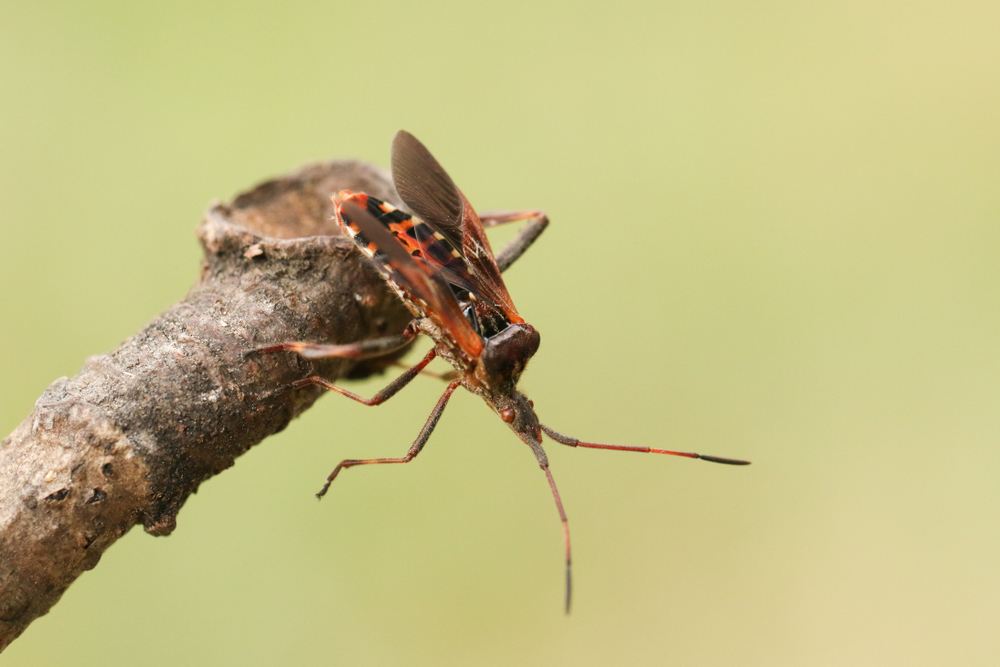
The western conifer seed bug is a unique-looking insect that was first discovered in the western United States (hence the name). This bug feeds on the seeds and immature cones of multiple species of conifers and hybrid trees. Over the course of time, the bug has spread further east and can now be found in Pennsylvania and Maryland. While not outright harmful, the bug can be a nuisance when it finds its way indoors.
Adult bugs are ¾” long and brown on the top. There is a prominent orange, yellow or white and black pattern on the upper side of the abdomen, and the bugs make a loud buzzing sound when in flight. Many people mistake these seed bugs for skinny stink bugs due to their similar appearance.
Western conifer seed bugs produce a single generation every season. Adults come outside from overwintering sites in the early summer and feed on pinecones and seeds. Eggs are then laid on conifers and hatch within 10 days. These young bugs eat the needles and soft tissue of cone scales. In the middle of August, the western conifer seed bugs reach adulthood and feed on ripening seeds until early fall. Then, the adults will seek shelter in overwintering sites behind pine bark, inside of dead Douglas fir trees and in rodent and bird nests. If the adults cannot find shelter, they can also seek it inside of homes or buildings.
While western conifer seed bugs are not harmful to humans, the overconsumption of fir and pine seeds can lead to a serious loss of seed crop. The economic impact is most acutely felt in the decline in quality and viability of conifer seed crops. It can also be concerning for homeowners when it moves inside. Some homeowners can face severe infestations when the weather chills, and it can be disconcerting to have an invasion strike your property.
This bug can be spotted on the outside of homes and buildings in the early fall near windows and doors, especially in New York, Pennsylvania, and Maryland. The best way to keep these pests outdoors is by securing any possible entry points. Replace any loose screens on windows and doors, caulk gaps around door frames and window frames, check for cracks around the chimney and screen your fireplace chimney. Our Home Protection Plan aims to keep unwanted pests out of your home and away from your property. If you have unwanted pests schedule a property inspection or give us a call today: (410) 653-2121.
Finding yellow jackets flying around your yard doesn't automatically mean you need pest control. But…
You find ants marching across the kitchen counter. A mouse disappears behind the refrigerator. Or…
Finding a mouse inside your Maryland home usually leads to an obvious question: How did…
Back-to-school season brings a major shift in routine for Maryland families. Kids are heading back…
Many homeowners assume that if they keep a spotless home, they'll never have to worry…
Few pests can ruin time outdoors as quickly as mosquitoes. Whether you're hosting a backyard…